
|
The times in our brochure and website are arrival times to our facility. We are unable to accommodate persons who are pregnant, under the influence of drugs or alcohol, have a torso diameter larger than 52" or are younger than 6 years old.
Where is Geyser Whitewater Expeditions Located?
( The times in our brochure and on this site are ARRIVAL times to our shop ) We are located in Big Sky Montana. Located 39 miles South of Bozeman, MT. and 45 miles North of West Yellowstone, MT. on highway 191, Big Sky is a year round Ski and Summer resort and a popular base for vacations to Yellowstone/Teton National Parks. It is in the heart of beautiful mountain scenery, world class fishing, hiking and of course rafting! Our area offers visitors all the amenities necessary for a truly magnificent vacation. Great lodging, dining, golf and shopping are all within a mile of our office.
What should I wear on the river?
Always bring a long sleeve fleece jacket or wool sweater to wear on the river. For every trip, we always recommend a bathing suit or pair of shorts to wear under your wetsuit. Wetsuits and booties can be rented. Most of the time a wetsuit and booties will add greatly to your comfort and can be rented. For even more comfort you can rent a pair of gloves. Bring a fleece top or long sleeve wool garment to wear on the river. ( this will go under your wetsuit) We then provide you with a nylon rafting jacket to ward off some spray. You will also want to bring a sweatshirt or fleece jacket for comfort after the trip. Sandals don't offer as much protection, and tend to come off easily in a swim, so we recommend booties or tennis shoes. Sunglasses, especially prescription glasses, should have a strap, available at our store, or other retainer that cinches tight. Use sunscreen, but don't put it on your forehead, or the backs of your legs. It may run into your eyes, or cause you to be slipping all over the boat.
I've never been rafting before. Which trips are best for me?
All of our trips can be enjoyed by people with no experience. During high water we do have age limitations on some sections of river and we will recommend a trip suitable for your party. Our minimum age is six. We are sorry but we are unable to accommodate pregnant people on our trips. No alcohol or drugs before or after our trips. Our Lifejackets fit people with a maximum torso of 52". Any larger and we are unable to accommodate you.
I can't swim. Can I still go rafting?
On all river trips, guests are required to wear a coast guard approved buoyancy vest, called a PFD (Personal Floatation Device). The PFD will keep you afloat in the event that you find yourself in the river. Many non-swimmers have a great time on rafting trips. It is more important that you are not afraid of the water.
I have a family with young children. Which trips can I take?
Our minimum age for all trips is six years old, however due to water levels this can change. We often have a section of river to float even if another section requires an age limit that doesn't work for you.
What happens on a typical trip? How are the boats set up?
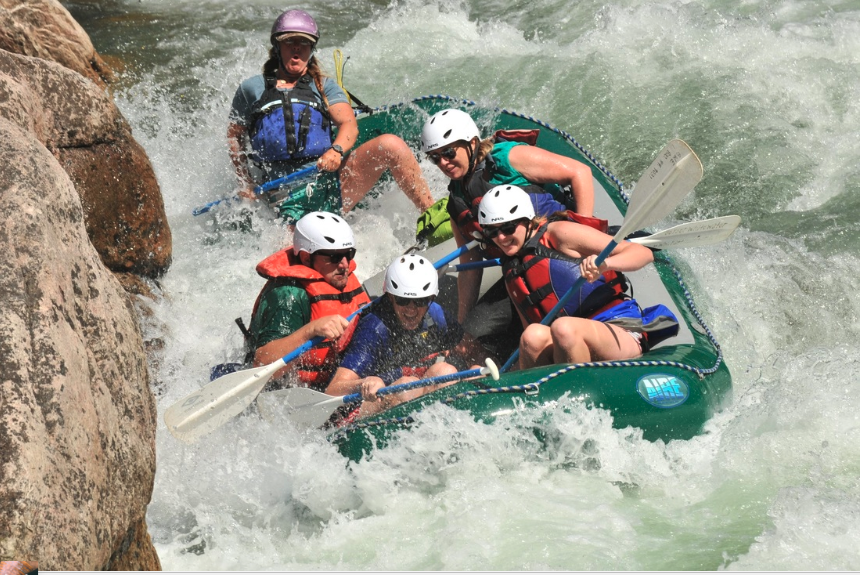
You'll meet at our shop a half hour before departure. After check in we will get your gear and you can use our changing facilities to prepare. You will also have time to buy any last minute supplies or a snack before your trip. You'll go to the river put-in via our shuttle vehicles, from where the trip will start, and the trip leader will give you a safety talk. This is a vital 20 minutes or so of information! You should then be ready to begin your river trip. A typical raft seats six to seven people and a guide and has hold-on handles for every rafter. As you approach some of the rapids, the guide will provide you with further instruction on how to navigate.
What are my chances of falling out of the boat? What should I do if I do?
Believe it or not, many people love falling out of the boat. It's exciting. But it can be disorienting and a little overwhelming at first. Many people have taken multiple trips and never fallen in. Some people swim on their first trip. It's a part of rafting. Before you go on any trip, you'll be given instructions on what to do if you fall in, and how to stay safe. If you follow your guide's instructions, falling out is rare and even fun if it does happen.
It looks like rain. Will the trip still go?
Most rafting trips go, rain or shine. Occasionally, due to circumstances beyond our control, such as high or low water, lightning, etc, we must cancel or postpone a trip.
How Experienced is Geyser Whitewater Expeditions?
We are celebrating 15 YEARS in 2006 and are proud of becoming the regions number one raft company! Jim Robbins and Eric Becker, partners, grew up rafting and enjoying the waters of Colorado and Montana as kids. In college the two worked as guides on over 22 rivers throughout the country and have kayaked many more. They share their enthusiasm and love of the sport with the guides, many of whom have been with the company for up to 10 years. We have become Southwest Montana's leading outfitter by having fun and guiding enjoyable trips for all of our guests.
Is rafting dangerous?
Rafting is thrilling, exciting, wet, wild and unbelievably fun. However, as in all adventure sports, there is an inherent risk involved. That risk contributes to the excitement, and is one of the reasons people enjoy it so much.
How fit should I be to go rafting? Is it strenuous?
That depends on the type of raft-kayak, paddle boat or oar boat. On the paddle boat, you will have a paddle in your hands and will participate with the paddling. You should be reasonably healthy, and must be able to fit into the buoyancy vests. Paddling can be tiring, but guides will instruct you regarding efficient paddling technique. Oar boats, where you ride along as a passenger, are available as well. If you're in doubt check with your doctor before you go.
I am a senior citizen. Which trips do you recommend for me?
This depends on how much excitement you are looking for or any health/fitness limitations. Many seniors have joined us on all of our trips however. We are the outfitter of choice for the Montana Elder Hostel program.
What is the cancellation policy?
Advanced reservations are recommended and can be made on-line or by telephone. Short notice reservations are welcome. A 50% deposit is required to guarantee space and can be made with MasterCard, Visa or American Express. A 24 hour cancellation (2 weeks for groups) notice is required to receive a refund. ALL TRIP TIMES ARE ARRIVAL TIMES TO OUR FACILITY.
Can I bring my camera or video camera?
We don't recommend bringing video cameras or even still cameras on raft trips. Many people bring disposable waterproof cameras (also available in our Outfitter Shop), which are well suited to rafting and work just fine. The quality of the pictures is pretty good, and if you lose it, it's not a significant loss. On all of our trips, professional photographers capture your raft in an exciting rapid. You can view and order these photos after the trip.
What do I need to Know about Orientation, Safety and Liability?
Orientation and Safety
Prior to all river trips, we will give all rafters an orientation and safety talk. It is important to pay close attention as guides discuss the river, the proper use of the equipment, and safety procedures.
The orientation and safety talk might cover some of the following key points:
- A general description of the river and the rapids you will run.
- An explanation of the basic equipment: raft, life jacket, and paddle.
- A demonstration of the basic techniques for paddling and controlling the raft.
- A discussion of the potential hazards that you may encounter.
- A demonstration of what to do if you fall in.
- Information about the care and conservation of the river.
- An opportunity for you to ask questions.
Don't be alarmed if, during the orientation and safety briefing the guides joke about the upcoming trip. It is often an effective psychological method to break the ice with a new group, and it sometimes helps tense rafters to relax. We will take the necessary precautions to ensure an enjoyable trip for all rafters. Your chances of sustaining an injury requiring medical attention are slight if you follow a few basic rules. Listen for additional ones given by your guides.
- Always wear your life jacket on and near the river! Make sure it is tight enough and securely fastened.
- Do not drink alcoholic beverages either before or during the river trip.
- Always wear tennis shoes or durable water shoes.
- Avoid wearing or carrying sharp objects.
- Be careful with your paddle when going through rapids. Hold on to it with both hands. If you must release it with one hand, keep it outside the raft; many rafters' injuries result from flailing paddles.
- Should you fall from your raft, or if it should capsize, get out from under it. Once in the water, lean back, point your feet downstream, and let the water carry you. Don't try to stand up in swift water or your feet may become lodged between rocks. Try to propel yourself toward a raft, calm water, or best of all shore. Your guides will tell you the best option depending on water levels. Keep your feet up!
In addition to being experienced in paddling techniques, raft control, and the skills of river reading, all of our guides are certified in first aid, cardiopulmonary resuscitation (CPR), and trained in river rescue methods.
Liability
Although Geyser Whitewater Expeditions and it's guides make every effort to provide fun and enjoyable trips, river rafting does include some danger. Due to the potential hazards of whitewater rafting, you must participate at your own risk. You can, however, minimize the risks by using good personal judgment and by following the instructions of your guides.
You will be given an "Assumption of Personal Liability" form prior to your trip; you must read and sign it, and responsible adults must sign for children. Among other things, it simply states that you are expected to follow the outlined rules on the river. Also you agree that you will not hold the rafting outfitter liable for any personal injuries, loss of property, or damages resulting from your river trip. If you have any handicaps or medical problems that might hinder your ability to watch out for your own safety, you should inform the guides before the trip.
The personal liability form also asks your permission to use photographs taken of you on the river for publicity or other purposes. View the Adult Release Form or the Minor Release Form
Should I tip my guide?
Tipping is not expected, but is certainly appreciated. If you feel your guide has done a good job, keeping you safe, and perhaps even entertained while sharing the river environment with you, then feel free to show your appreciation.
What Kind of Equipment do we use?
Rafts
Geyser Whitewater Expeditions uses state of the art rafts manufactured by the AIRE company in Boise Idaho. They are 7-8 person, 13' self bailers and are outfitted with hold -on-handles, foot cones and thwarts for your comfort.
Paddle rafts
Teamwork and fun are the key elements of paddle rafting! Everyone, including the guide, uses a paddle and works together as a team to navigate and maneuver the raft.
Oar rafts We can also use oar frames on our rafts that enable young families, seniors, and other guests to experience easy and moderate whitewater and enjoy the surrounding environment without having to paddle. The guide does all of the work, using two long oars attached to a rowing frame to navigate the river.
Kayaks
All of our kayak trips use the best equipment made. Our boats are made by Perception, the world leader in kayak manufacturing. We use sit-on-top kayaks which are great for people interested in floating the river but don't have any previous instruction or experience. Our kayak school is intended for people who wish to learn the fundamentals of closed cockpit, traditional kayaks. These require instruction on flat water and are taught by certified kayak instructors.
Personal Flotation Device (PFD) or Life Jacket
Without question, the most important item of equipment on any river is Personal Flotation Device (PFD) or life jacket! The guides will provide you with one at the beginning of your trip; make sure it fits properly and fastens securely. Before each trip our helpful guides will make sure it fits and is adjusted properly. Wear the life jacket at all times on the river!
Paddle The single-bladed paddle (not an oar) is an important item in making your whitewater outing a success. During the orientation and safety talk the guide will demonstrate its use. Pay careful attention to the guide's instructions for propelling and maneuvering the raft with the paddle. Your quick mastery of the correct paddle techniques will add greatly to your enjoyment and enhance your value as a team member. You are expected to do your share of the paddling.
Helmets
Safety helmets are worn while rafting to prevent potential head injuries from rocks or flailing paddles. Helmets are provided, rafters will be required to wear them and keep them fastened during the entire trip.
Wetsuits, Booties, Gloves
We strongly recommend these items for you comfort. They can be rented for a small charge and will greatly add to the enjoyment of your trip. Wetsuits are made from neoprene and are worn over your shorts or bathing suit. Booties are worn with bare feet or you may wear a pair of wool or ski socks.
Top
|